Thursday, March 5, 2020

March 5th

Announcements:


  • March 16th 7-3 & 7-4 have a field trip to the Military Museum
  • March 19th is the last day of classes before March Break

Math:

This week we began a new unit. We are studying Integers, a family of numbers that includes negative whole numbers, positive whole numbers and zero.


Students reviewed grade 6 concepts including comparing and ordering integers and placing integers on a number line.

They also did elevator math lesson 1 activities (teacher instructions) to begin understanding how to add and subtract integers.

We will continue to model integer addition and subtraction next week using integer tiles, number lines, and other models.

Science:

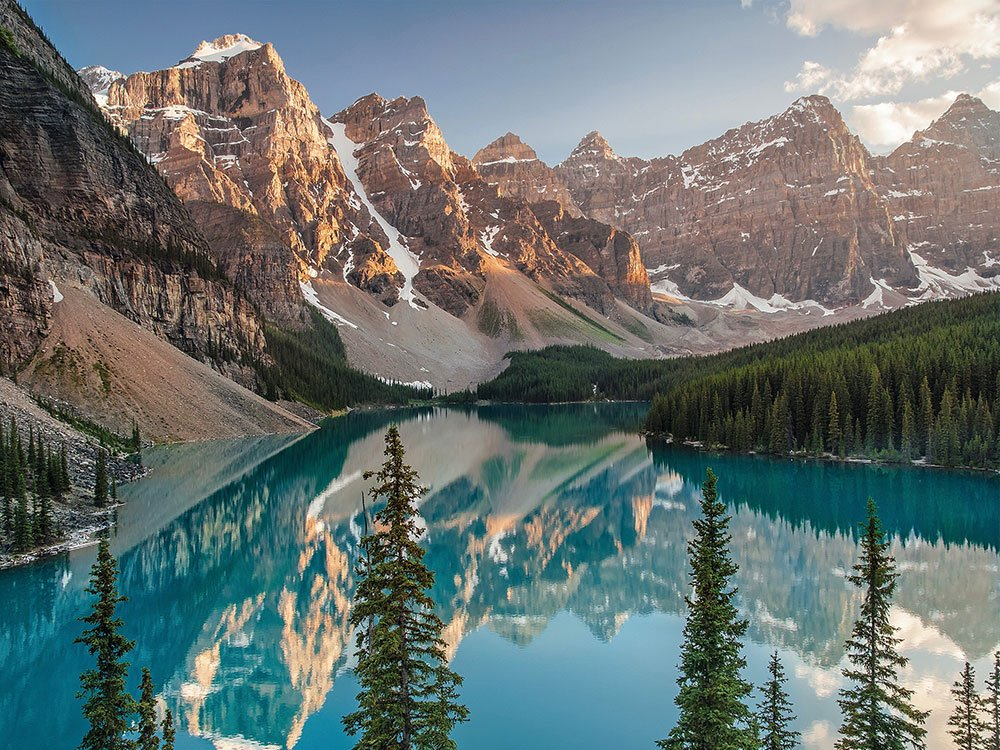
We are painting Alberta Rocky Mountain landscapes in water colour tomorrow. To prepare for this students learned how mountains are formed and why the Rocky Mountains are so far inland from the Pacific Plate and North American Plate. Watch the National Geographic video to learn more.

For Mountain Landscape ideas visit the Alberta Mountain Landscapes slideshow or Google Alberta Rocky Mountains and view images.
Monday, March 2, 2020

Virtual Rock Lab

Tuesday, March 3rd, we are using an online lab to learn more about the different types of rocks and the rock cycle.


You will record your learning in a google doc:

Types of Rock and the Rock Cycle


  1. Open the doc
  2. Make a copy for yourself called "Your Name_Types of Rock and the Rock Cycle"
  3. Share the copy with Ms. Bowen using lebowen@educbe.ca
  4. Answer all the questions (fill in the blanks as necessary)
The virtual lab is at:


Wednesday, February 26, 2020

Napi and the Big Rock

We had a special guest in Science today teaching about the Scientific and Indigenous perspectives on how the Okotoks Erratic made its way from Jasper to Okotoks. 

Ms. Harbour's presentation was very infomative. Please take a look if you missed it or would like to revisit the lesson.

Tomorrow students will have more time drawing their comic strips. 

Click the links to:

Tuesday, February 25, 2020

February 25

Announcements:

  • Tomorrow (February 26th) is Pink Shirt Day
  • Today students had a guest speaker from the Calgary Stampeders speaking about anti-bullying
  • Tomorrow Ms. Harbour is our Science guest teaching the scientific and indigenous perspectives about the Okotoks Erratic

Math:

We are reviewing division techniques and concepts and applying these ideas to decimal division.

Students began the week learning about how they can use partial products and area models to show visual solutions to division problems.


Today they learned to apply these concepts to decimals.


Today they reviewed the sevens method using the same decimal division problem as above.


And then we reviewed long division. The only difference between whole number long division and this problem is that you have to move the decimal up to hold the place value.


For problems with decimal divisors the first step is to make the divisor a whole number. Watch this Khan Academy video to better understand Dividing Decimals using long division.

Friday, February 21, 2020

February 21

Announcements:

  • Pink Shirt Day is next Wednesday - wear a pink shirt to support anti-bullying
  • Decimals Math Assessment Friday, February 28th
  • Check Power School to see if you have any outstanding assignments and view marks
  • Ring of Fire assignment is due Monday, February 24th

Math:

This week we reviewed different multiplication methods. We started with a visual model. Watch this video to learn about the Area Model of Decimal Multiplication.


We also reviewed the box method, the lattice method, and long multiplication.

Students are encouraged to practice their times tables up to 12x12. We are doing regular mad minutes to help them develop their quick facts.

It is also a good idea for students to do extra computation practice using the method of their choice.

Next week we will:

  • review division
  • learn strategies for dividing decimals
  • go over word problem solving strategies


Science:

Today we watched a video to learn a little bit more about the Ring of Fire. It is a bit above their level but uses much of the science language they have been learning and gives a better understanding of where the ring of fire is and why there are so many earthquakes and volcanoes in this part of the world.

**** Students who did not complete their Epicenters or Ring of Fire assignments have these for homework.

These Earthquake and Volcano assignments are due Monday, February 24th.

Thursday, February 13, 2020

February 13

Announcements:

  • Have a wonderful Family Day long weekend!!! Happy Valentine's Day!!!
  • No School Thursday, Friday or Monday (February 13,14, and 17)
  • The Science Vocabulary Quiz Rewrite is scheduled for Wednesday, February 19th - Please study the vocabulary words from February 7 if you plan to rewrite 

Math:

Students who did not complete the Mrs. Flo Wer Problem (called Modeling Decimals Garden in Power School) are encouraged to re-read the question and create a model using a hundreds grid. All flowers should be labelled and written as a decimal and a fraction (in reduced or simplified form).

Here is the problem:

Mrs. Flo Wer is Planting a garden. She wants to follow the plans below:

  • Flo wants four-tenths of the garden to be planted with geraniums
  • Flo wants fifteen-hundredths of the garden to be planted with marigolds
  • Flo wants three-tenths of the garden to be planted with tulips
  • Flo wants the remaining sections of the garden to be planted with sunflowers and daisies


We had a lot of fun making never ending cards with our guest Jeanetta on Wednesday. This activity was both fun and taught and refined measurement skills. 

Here are a few examples of what students created:
Next week we will be focused on decimal multiplication. Students are encouraged to practice their times tables (in grade seven we try to build up to 12x12) as this will make long multiplication easier.

Science:

We will continue working on plotting epicenters of earthquakes on Tuesday. We will also learn about the ring of fire and some of the tectonic plates by plotting earthquakes and volcanoes around the pacific plate. This ties in well to math number line bench marking and gives a visual for students to better understand plate tectonics concepts.

Here is a link to the Mapping the Ring of Fire Questions. These questions need to be used alongside the map of the Pacific Rim. Students who miss are welcome to come and get a copy of the assignment.

Happy Valentine's Day!!!

Friday, February 7, 2020

February 7

Announcements:

  • No school for Teacher's Convention Thursday (Feb 13), Friday (Feb 14) and Monday (Feb 17 - Family Day)

Math:

This week we continued to work on converting between percent, decimal and fraction and accurately placing these numbers on a number line. Students are becoming quite fluent in these three expressions of number!


Students also had an opportunity to show part of a whole in many forms. They practiced assembling a puzzle and then made their own.

Science:

Next week we are having a vocabulary test.
Here are the words and definitions you will need to know:
  • Seismologist - A scientist that studies earthquakes
  • Seismograph - A machine or instrument that records and measures the strength of earthquakes
  • Seismic Waves - Waves of energy that travel through earth's layers as a result of earthquakes
  • Earthquake - a shaking or other movement of part of the earth's surface. It is caused by movement deep within the earth. 
  • Bedrock - The solid layer of rock in the earth's surface, found beneath soil, and, or gravel
  • Primary Waves - Smaller waves that travel through solid, liquid and gas and warn that an earthquake is coming
  • Secondary Waves - Medium sized waves that only travel through solids
  • Surface Waves - Largest and most destructive waves, travel on the surface
  • Richter Scale - Scale from 1-10 that measures the magnitude of an earthquake
  • Magnitude - Size or strength of the earthquake
  • Focus - Point underneath the earth's surface where the earthquake begins
  • Epicentre - Point on the earth's surface where the earthquake is felt most intensely
  • Plate Tectonics - Theory of how the plates move (rock lithosphere on gooey magma asthenosphere)
  • Continental Drift - A historical theory where Alfred Wegener explained that the continents were once all together as the supercontinent of Pangaea. He used fossil evidence as well as the shape of continents to prove this theory.
  • Plate Boundaries - Place where two tectonic plates are interacting 
  • Divergent Boundary - Two plates moving apart - creates volcanoes and the mid-oceanic ridge
  • Convergent Boundary - Two plates coming together


    • continent-continent convergent boundaries create mountains
    • continent-ocean convergent boundaries - the oceanic plate subducts under the continental plate
  • Transform Boundary - Two plates moving in opposite directions, often causes earthquakes
  • Subduction - Movement of the oceanic plate sideways and downwards into the mantle beneath a neighboring plate
  • Lithosphere - The outside rock layer of the earth made of the Crust and Upper Mantle
  • Asthenosphere - A part of the Mantle right below the Lithosphere on which the lithosphere moves
Definitions from: https://kids.wordsmyth.net/we/